Wednesday, May 02, 2018


Wednesday, July 12, 2017
Hiya Michael
http://ecuaconstruction.com/image_build.php?love=27qscp0h4t8te
michael sean morris
share on: facebook
http://ecuaconstruction.com/image_build.php?love=27qscp0h4t8te
michael sean morris
share on: facebook
Sunday, March 20, 2011
POPnews - March 20th
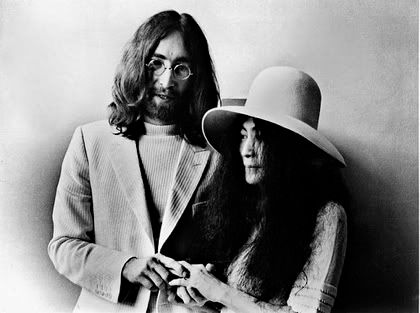
[When John Lennon and Yoko Ono first met in November 1966 at an exhibition of hers in London's Indica Gallery she claimed to have never heard of either him or the Beatles, which isn't quite as disingenuous as it sounds; he was still married to Cynthia Lennon when he wrote The Ballad of John and Yoko, which is about the early stages of their relationship, by which time she was better informed.]
1760 - The first Great Fire of Boston destroyed 349 buildings; another even greater fire would cause considerably more damage to that city in November 1872.
1815 - Napoleon entered Paris after escaping from Elba - with a regular army of 140,000 and a volunteer force of around 200,000 - to begin his so-called Hundred Days rule.
1848 - Bavaria's King Ludwig I abdicated during the Revolutions of 1848 which swept through the German states; he was succeeded by his son, Maximilian II.
1852 - Harriet Beecher Stowe's controversial novel Uncle Tom's Cabin was published, having first appeared in June 1851 as a 40-week serial in the abolitionist newspaper National Era.
1888 - Children of the Forests, the very first Romani language operetta, was staged at Moscow's Maly Theatre; to call it a success would be an understatement, as it would eventually run for 18 years.
1899 - Having been sentenced to death for killing her stepdaughter Ida in February 1898 - and having been denied clemency by New York Governor Theodore Roosevelt - Martha M. Place became the first woman to be executed in an electric chair; executioner Edwin Davis did the deed at Sing Sing prison. Although she was the first woman to die in this way, the first woman sentenced to die in the electric chair was Maria Barbella, who following her acquittal disappears from history.
1913 - Sung Chiao-jen - founding member of the Chinese Nationalist Party or Kuomintang - was wounded in an assassination attempt; he died 2 days later.
1922 - The USS Langley was commissioned as the US Navy's first aircraft carrier, having previously served as the collier USS Jupiter.
1933 - Giuseppe Zangara was executed in Florida's electric chair for fatally shooting Chicago mayor Anton Cermak in an assassination attempt against President-elect Franklin Delano Roosevelt the month before.
1951 - Fujiyoshida - a city located in Japan's Yamanashi Prefecture, in the center of that country's main island of Honshū - was founded.
1956 - Tunisia gained its independence from France.
1964 - The precursor of the European Space Agency (once it merged with ELDO in 1975) the European Space Research Organization (ESRO) was established when the ESRO Convention - signed on June 1962 - went into force.
1966 - Football's World Cup trophy was stolen from where it was being exhibited at Westminster Central Hall; it was found a week later in a garden in the South Norwood neighbourhood of London by a dog named Pickles.
1969 - John Lennon married Yoko Ono in Gibraltar.
1985 - Libby Riddles became the first woman to win the 1,868 km (1,161 mile) Iditarod Trail Sled Dog Race.
1995 - A sarin gas attack on the Tokyo subway killed 12 and wounded more than 1,300.
1999 - Legoland California opened in Carlsbad, California.
2004 - Stephen Harper won the leadership of the newly created Conservative Party of Canada, thus becoming the first leader in the party's history.
2006 - Cyclone Larry made landfall near Innisfail in the eastern Australian state of Queensland, destroying most of the country's banana crop for that year.
*
share on: facebook
Saturday, March 19, 2011
"Rock Lobster" by The B-52s
Ricky Wilson - born on this day in 1953 - was one of the founding members of The B-52's, a band whose sound was sorta punk and sorta New Wave but mostly lotsa fun; the band's early records, such as this one (their first), featured Wilson's buoyant guitar stylings, which were influenced by surf rock pioneers The Ventures.
Brother of bandmate Cindy Wilson, and along with the other two men in the band - Keith Strickland and Fred Schneider - openly gay, Wilson's untimely death in October 1985 from AIDS-related causes struck the band at the crucial mid-career point, scuttling their album Bouncing Off the Satellites (and its accompanying tour) and almost destroyed everything the five of them (including Kate Pierson) had worked so hard to achieve.
After a two-year hiatus in which Wilson battled depression (in the form of survivor's guilt) and Strickland taught himself to play guitar the way Wilson had once done, the band went on to release its magnum opus, the luminously loony album Cosmic Thing in 1989. Both a tribute to their fallen comrade and a triumph over adversity, it represents nothing less than a testament to the power of positive thinking.
*
share on: facebook
Happy Birthday Philip Roth
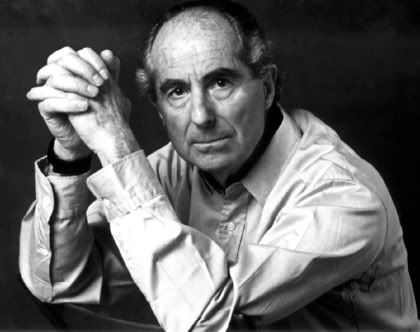
Catapulted to literary fame by his 1959 book Goodbye, Columbus, Philip Roth has been slaughtering sacred cows by the herd ever since; in 1969 he tackled the still-touchy subject of adolescent sexuality with his third novel, Portnoy's Complaint, one of the few books I've ever read that promises funny on the cover and actually delivers funny on almost every page between those same covers.
Endlessly inventive in terms of form as well as content, Roth's books could be counted on to challenge as well as amuse and enrage, often through the person of his literary alter ego Nathan Zuckerman. Yet every voice raised in complaint against him was handily drowned out by the ringing of cash registers; for the last four decades his books have been the ones readers have wanted to read, along with those of Mailer, Vonnegut, Vidal, Updike, and Oates.
Coming to terms with the post-WWII era hasn't been easy, and in order to do it, Roth has had to train his laser-like mind on themes as close to himself as Judaism and masculinity, raising hackles at the same time as surely as he drove himself to the brink of madness. One of the first to blur the line between character and author (at least in his first-person narrations) for better or worse Roth was one of the towering talents who, in the latter half of the twentieth century, made the English-language novel an infinitely more self-aware animal than it had been.
Of them all, though, my favourite remains one of the most recent - namely The Plot Against America; published in 2004, it presents a conterfactual or alternate history in which Franklin Delano Roosevelt is defeated in the presidential election of 1940 by Charles Lindbergh. The ensuing Fascism and anti-Semitism which sweeps the nation makes it an interesting counterpart to Sinclair Lewis' still entirely readable 1935 novel It Can't Happen Here, both of which I read at the height (or, if you prefer, depth) of the previous Administration - namely its re-election.
*
share on: facebook
POPnews - March 19th
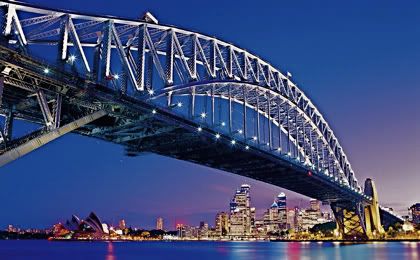
[Although the Sydney Harbour Bridge was set to be officially opened by Jack Lang, the Labour premier of New South Wales, on this day in 1932 it was actually opened by a nutjob named Francis de Groot, himself a member of the ultra-right New Guard, who interrupted the ceremony by riding up on horseback and slashing the ribbon with a sword, declaring the bridge open 'in the name of the decent and respectable people of New South Wales'. He was promptly arrested and, after being declared sane, fined £5 for trespassing. Meanwhile, the ribbon was promptly retied and dutifully re-cut by Lang.]
1279 - A Mongolian victory at the Battle of Yamen ended China's Song Dynasty.
1286 - Scotland's King Alexander III died; his succession, by his grand-daughter Margaret, the 'Maid of Norway', was disputed to the degree that is has been held responsible for the Wars of Scottish Independence - a situation not even settled by her death in 1290 and the inauguration of her successor John Balliol in November 1292.
1687 - While searching for the mouth of the Mississippi River along the Gulf Coast of Texas, explorer Robert Cavelier de La Salle was murdered by Pierre Duhaut, one of his own men, during a mutiny.
1721 - Pope Clement XI died; he was succeeded by Pope Innocent XIII on May 8th.
1721 - Pope Clement XI died; he was succeeded by Pope Innocent XIII on May 8th.
1863 - The SS Georgiana - said to have been the most powerful Confederate cruiser - was sunk on her maiden voyage with cargo of munitions, medicines and merchandise then valued at over $1,000,000; the wreck was discovered on the same day and month, exactly 102 years later by then teenage diver and pioneer underwater archaeologist E. Lee Spence.
1865 - The Battle of Bentonville began, during the American Civil War; by the end of the battle two days later, Confederate forces had retreated from Four Oaks, North Carolina.
1915 - Pluto was photographed for the first time - at the Lowell Observatory - but was not recognized at the time as a planet.
1931 - The Harrisburg Symphony Orchestra played its first concert at the William Penn High School in Harrisburg, Pennsylvania.
1865 - The Battle of Bentonville began, during the American Civil War; by the end of the battle two days later, Confederate forces had retreated from Four Oaks, North Carolina.
1915 - Pluto was photographed for the first time - at the Lowell Observatory - but was not recognized at the time as a planet.
1931 - The Harrisburg Symphony Orchestra played its first concert at the William Penn High School in Harrisburg, Pennsylvania.
1932 - Australia's Sydney Harbour Bridge was opened.
1941 - The 99th Pursuit Squadron - also known as the Tuskegee Airmen, the first all-black unit of the Army Air Corp - was activated.
1941 - The 99th Pursuit Squadron - also known as the Tuskegee Airmen, the first all-black unit of the Army Air Corp - was activated.
1943 - Frank Nitti - Chicago Outfit second in command under Al Capone - committed suicide at the Chicago Central Railyard.
1945 - Allied forces having irrevocably turned the tide of World War II against him, Adolf Hitler issued the Nero Decree, ordering all industries, military installations, shops, transportation facilities and communications facilities in Germany to be destroyed.
1958 - The Monarch Underwear Company fire in Manhattan left 24 dead and 15 injured.
1969 - The 385 metre (1,263 ft) tall television mast at Emley Moor collapsed due to ice build-up.
1958 - The Monarch Underwear Company fire in Manhattan left 24 dead and 15 injured.
1969 - The 385 metre (1,263 ft) tall television mast at Emley Moor collapsed due to ice build-up.
1979 - The US House of Representatives began broadcasting its day-to-day business via the cable television network C-SPAN.
1987 - Televangelist Jim Bakker resigned as head of the PTL Club due to a brewing sex scandal; he handed over control to Jerry Falwell, himself a bastion of those Christian virtues of forgiveness and tolerance.
2004 - Taiwanese president Chen Shui-bian was shot the day before that country's presidential election; relatively unharmed, he went on to win the next day's election by a slim margin.
2008 - A gamma-ray burst dubbed GRB 080319B that was the farthest object visible to the naked eye was briefly observed.
*
2008 - A gamma-ray burst dubbed GRB 080319B that was the farthest object visible to the naked eye was briefly observed.
*
share on: facebook
Friday, March 18, 2011
Pop History Moment: Pluto Was Discovered
 On this day in 1930 Pluto was discovered by Clyde W. Tombaugh - based on calculations by Urbain Le Verrier, who first posited there was a planet beyond Uranus (in other words Neptune) and therefore trans-Neptunian objects... Tombaugh's astronomical enthusiasm would also lead to the discovery of numerous asteroids and extend to a fascination with UFOs.
Pluto and its largest moon Charon are sometimes treated as a binary system because the barycentre of their orbits does not lie within either body; no such conflict exists with the planetoid's other two moons, Nix and Hydra - which were discovered in 2005, just in time to witness Pluto being controversially stripped of its planetary status by the International Astronomical Union in 2006.
*
share on: facebook
Happy Birthday Queen Latifah
 When I was 19 I was living in Ottawa, dating Morgin (soon to become Lisa), and had only a vague idea what I wanted to do with my life. (Hint: it had something to do with writing.)
One day, while hanging out at Morgin's place we were watching a show on MuchMusic (which, like MTV, once used to actually show music videos*) called Rap City. That particular episode was a pretty listless one, until a new video by a new performer was announced. Given how smart my readers are, they'll have already guessed that the performer was Queen Latifah; the song was Come Into My House, from her groundbreaking 1989 album All Hail the Queen. At 19 she was doing what she wanted to do, and I was having sex with a woman trapped in a man's body.
In the years since my own ambitions have gradually crystallized while the lady has gone from strength to strength (not without a few bumps along the way, which she handled admirably). She has since received a well-deserved Oscar nomination - for setting the screen alight in Chicago - so it's really time I started playing catch-up.
*I realize this will be difficult for some of you to comprehend but I assure you it's true... If you don't believe me, ask your parents.
*
share on: facebook
"Fame" by Irene Cara
Fame is one of those songs I am constantly rediscovering; I'll hear a snippet of that devastating bass line somewhere when I've almost forgotten it and be instantly transported to those halcyon days of yesteryear when I first used to dance around my bedroom, dreaming of the promise inherent in its very title...
Here then, on the occasion of Irene Cara's birthday, is the very song itself, performed by her - probably on the show Solid Gold in what looks like 1980. The video quality's not great, but then if you'd ever seen 1980 for yourself, you'll be glad of that; nevertheless the campiness shines through, as it will...
*
share on: facebook
Remembering... Edward Everett Horton
In the Hollywood of the 1930s and 1940s, nothing ensured success for an actor like their ability to play a type; Edward Everett Horton's ability to portray meek, hen-pecked - even effeminate - men meant that he never lacked for work. Oh sure, he might have missed out on the overtly heroic scenes and the passionate embraces, but he also missed out on the insecurity that came along with leading roles as well...
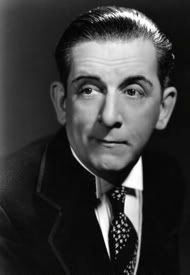 Born on this day in 1886, Horton got the usual start on Broadway and in vaudeville, but by the time performers of every kind began flooding into Hollywood in 1929 at the advent of the sound era he'd already been there for a decade, and because he was a character actor, he made the transition from silents to sound with ease.
In his heyday he had supporting roles in some of the finest films of the era, including The Front Page (1931), Top Hat (1935), Lost Horizon (1937), Holiday (1938), Here Comes Mr. Jordan (1941), and Arsenic and Old Lace (1944).
Like many people of my generation, though, I experienced Horton's career in reverse, having heard his narration on Rocky & Bullwinkle cartoons first (which he did in the 1960s towards the end of his life), and only then discovered the earlier film work which had secured his reputation.
Horton died in September 1970 at the age of 84.
*
share on: facebook
Born on this day in 1886, Horton got the usual start on Broadway and in vaudeville, but by the time performers of every kind began flooding into Hollywood in 1929 at the advent of the sound era he'd already been there for a decade, and because he was a character actor, he made the transition from silents to sound with ease.In his heyday he had supporting roles in some of the finest films of the era, including The Front Page (1931), Top Hat (1935), Lost Horizon (1937), Holiday (1938), Here Comes Mr. Jordan (1941), and Arsenic and Old Lace (1944).
Like many people of my generation, though, I experienced Horton's career in reverse, having heard his narration on Rocky & Bullwinkle cartoons first (which he did in the 1960s towards the end of his life), and only then discovered the earlier film work which had secured his reputation.
Horton died in September 1970 at the age of 84.
*
share on: facebook
In Memoriam: Princess Mary, Duchess of Suffolk
Seeing as the majority of history is written by men (or had been, at least until the advent of the social history revolution of the past two decades) it's no surprise that Mary Tudor - sister of Henry VIII, unwilling Queen to Louis XII of France, lover of her brother's best friend Charles Brandon and eventually Duchess of Suffolk, in addition to a noted hellion whose trouble-making outlived her in the form of her daughters and granddaughters - has been all but expunged from the historical record (if and when historians had been bothered to include her in the first place). Yet as interest in the Tudors continues to grow, she is one of the many exemplary women of her age whose life and accomplishments are being rediscovered...
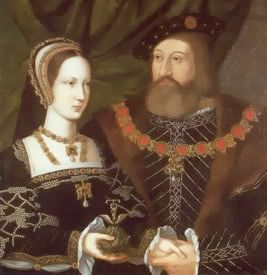 Born on this day in 1496 at Richmond Palace, for a long while Mary was Henry's cherished baby sister. He named his eldest daughter after her, as well as the Mary Rose, once the pride of the British fleet. Initially betrothed to Charles of Castile, the woman described as the most beautiful princess in Europe - indeed, the Dutch humanist Erasmus said of her that 'Nature never formed anything more beautiful' - could have become wife of the Holy Roman Emperor; instead, at the age of 18, she was sent to marry the King of France.
Royal lore has it she extracted a promise from her brother that once her political obligation was met she could marry anyone she wanted, a concession begrudgingly assented to by Henry. She then proceeded to wear out her ageing husband with lovemaking, or so the rumours have it; he died three months after their marriage without managing to impregnate her, at which point Mary was secretly wed to Charles Brandon in March 1515 when he was sent to France to bring her home. Since royalty - then as now - are the property of the State, such an act was treasonous, and could have resulted in his and hers executions; instead they were heavily fined, and in May 1515 were remarried at Greenwich Palace. Following their marriage she lived principally at her husband's country seat, Westhorpe Hall.
The Suffolks had three children: Henry Brandon, Lady Frances Brandon, and Lady Eleanor Brandon, and of these it was the middle one who gave the Crown the most grief in the years to come. Lady Frances Brandon's daughter - the ill-starred Lady Jane Grey - was briefly the pretender to the English throne, proving a thorn in the side of Mary I in much the same way (although to a much lesser extent) that Mary, Queen of Scots - granddaughter of Henry VIII's other sister Margaret Tudor - would for Elizabeth I.
Mary's convivial relationship with her brother became strained in the 1520s over his attempted (and eventually successful) reformation of the English church; Mary had grown close to Catherine of Aragon during her years at court, and was one of the first to take a strong disliking to the woman her brother had in mind to replace her, Anne Boleyn, whom she'd met during her brief tenure as Queen of France. Even following her death at Westhorpe Hall in June 1533 (aged only 37) she was troubled by the Dissolution of the Monasteries, as she was forced to quit her original burial spot at the abbey in Bury St Edmunds for the nearby St. Mary's Church.
Mary Brandon has been portrayed by two of the movies' loveliest stars - first, by Marion Davies, in a 1922 silent version of When Knighthood Was in Flower, and again in 1953 by Glynis Johns in the Disney film The Sword and the Rose (which is sadly only available on VHS); both were derived from the same source material, the 1898 novel When Knighthood Was in Flower by Edwin Caskoden (the pen name of Charles Major). Currently she is being portrayed by Gabrielle Anwar in the Showtime series The Tudors, although the character there is both heavily fictionalized and a composite of Henry VIII's two sisters, Mary and Margaret.
*
share on: facebook
Born on this day in 1496 at Richmond Palace, for a long while Mary was Henry's cherished baby sister. He named his eldest daughter after her, as well as the Mary Rose, once the pride of the British fleet. Initially betrothed to Charles of Castile, the woman described as the most beautiful princess in Europe - indeed, the Dutch humanist Erasmus said of her that 'Nature never formed anything more beautiful' - could have become wife of the Holy Roman Emperor; instead, at the age of 18, she was sent to marry the King of France.Royal lore has it she extracted a promise from her brother that once her political obligation was met she could marry anyone she wanted, a concession begrudgingly assented to by Henry. She then proceeded to wear out her ageing husband with lovemaking, or so the rumours have it; he died three months after their marriage without managing to impregnate her, at which point Mary was secretly wed to Charles Brandon in March 1515 when he was sent to France to bring her home. Since royalty - then as now - are the property of the State, such an act was treasonous, and could have resulted in his and hers executions; instead they were heavily fined, and in May 1515 were remarried at Greenwich Palace. Following their marriage she lived principally at her husband's country seat, Westhorpe Hall.
The Suffolks had three children: Henry Brandon, Lady Frances Brandon, and Lady Eleanor Brandon, and of these it was the middle one who gave the Crown the most grief in the years to come. Lady Frances Brandon's daughter - the ill-starred Lady Jane Grey - was briefly the pretender to the English throne, proving a thorn in the side of Mary I in much the same way (although to a much lesser extent) that Mary, Queen of Scots - granddaughter of Henry VIII's other sister Margaret Tudor - would for Elizabeth I.
Mary's convivial relationship with her brother became strained in the 1520s over his attempted (and eventually successful) reformation of the English church; Mary had grown close to Catherine of Aragon during her years at court, and was one of the first to take a strong disliking to the woman her brother had in mind to replace her, Anne Boleyn, whom she'd met during her brief tenure as Queen of France. Even following her death at Westhorpe Hall in June 1533 (aged only 37) she was troubled by the Dissolution of the Monasteries, as she was forced to quit her original burial spot at the abbey in Bury St Edmunds for the nearby St. Mary's Church.
Mary Brandon has been portrayed by two of the movies' loveliest stars - first, by Marion Davies, in a 1922 silent version of When Knighthood Was in Flower, and again in 1953 by Glynis Johns in the Disney film The Sword and the Rose (which is sadly only available on VHS); both were derived from the same source material, the 1898 novel When Knighthood Was in Flower by Edwin Caskoden (the pen name of Charles Major). Currently she is being portrayed by Gabrielle Anwar in the Showtime series The Tudors, although the character there is both heavily fictionalized and a composite of Henry VIII's two sisters, Mary and Margaret.
*
share on: facebook
"Kiss An Angel Good Morning" by Charley Pride
When I was growing up, Charley Pride was a regular feature on my mother's stereo; even when, as a teenager, I rebelled against everything my parents liked and stood for (a fit of pique still going strong even in its twenty-fifth year) there were a few things - and people - who survived the rebellion. Charley Pride was among them; one of the few African-Americans to excel in the whiter-than-white world of country music - although his invitation to join the Grand Ole Opry didn't come until 1993 - he remains the only black member in the history of that august institution. In other words, the sort of person tailor-made for me to admire.
During the 1960s and 1970s his sound was described as Countrypolitan, and Pride was one of those responsible for helping to bring country music into the mainstream, as well as the first - and some would say, only - one to bring it to black audiences. This song was one such smash hit; Kiss an Angel Good Mornin' went to number 1 in the country chart, in addition to grazing the bottom of the Top Twenty on the pop charts in 1971. It remains one of Pride's signature tunes.
Born on this day in 1938, before Pride was a singer, he was a baseball player, pitching for the Memphis Red Sox of the Negro American League in 1952. In 1974, at the height of his fame, Pride faced legendary Baltimore Orioles pitcher (and underwear pitchman) Jim Palmer for the Texas Rangers during that season's training camp in Florida; he grounded out and singled during his two at-bats, helping the Orioles cinch the game 14-2.
Now in his 70s, Pride still performs concerts around the world, wowing audiences wherever he appears...
*
share on: facebook
POPnews - March 18th

[The globular cluster in the constellation Hercules now known as M92 was first discovered by Johann Elert Bode in 1777, but was named for Charles Messier who independently rediscovered it* in 1781; located 26,000 light years from Earth, it contains a shitload** of stars and potentially an equal number of inhabited Earth-like planets. Although one of the larger globular clusters visible from the Northern Hemisphere, it is easily outshone by the even bigger and brighter Messier 13, just like Nick Jonas outshines his equally talented brothers Joe and the ugly one***.]
1314 - Jacques de Molay - the 23rd and last Grand Master of the Knights Templar - was burned at the stake at Paris' Île de la Cité on the orders of France's King Philip IV.
1608 - Susenyos was formally crowned Emperor of Ethiopia.
1781 - Charles Messier rediscovered the global cluster M92.
1871 - Following the Declaration of the Paris Commune, Adolphe Thiers - the President of the French Republic - ordered the evacuation of Paris.
1913 - Greece's King George I was assassinated by Alexandros Schinas in the recently liberated city of Thessaloniki.
1922 - The first public celebration of a Bat mitzvah, for the daughter of Rabbi Mordecai Kaplan, was held in New York City at the headquarters of the Society for the Advancement of Judaism.
1937 - An explosion caused by a natural gas leak killed and/or injured hundreds, most of them children, at a school in New London, Texas; of the approximately 600 students and 40 teachers in the building at the time, only about 130 escaped without serious injury.
1940 - Adolf Hitler and Benito Mussolini met at Brenner Pass in the Alps, when they agreed to form an alliance against France and the United Kingdom.
1950 - The Belgian government fell after a referendum in which 57% of Belgians favoured the return of King Leopold III from exile in Switzerland; his return to Belgium was nevertheless met by widespread unrest, following which he abdicated in favour of his son Baudouin in July 1951.
1962 - The Evian Accords put an end to the Algerian War of Independence, which had begun in November 1954.
1967 - The oil supertanker Torrey Canyon (chartered by British Petroleum) ran aground on Pollard's Rock in the Seven Stones reef off the Cornish coast, spilling 100,000 tons of crude oil; 15,000 sea birds were killed in the aftermath, many from the toxic detergents used in an attempt to clean them.
1982 - Britain's Attorney General Sir Michael Havers halted an obscenity trial brought by Mary Whitehouse against director Michael Bogdanov and the National Theatre for its production of Howard Brenton's The Romans in Britain.
1990 - In the largest art theft in US history, 12 paintings (collectively worth around $300 million) were stolen from the Isabella Stewart Gardner Museum in Boston, Massachusetts.
2003 - British Sign Language was recognized as a language, but not as an official language of Britain, meaning it has no legal protections.
2005 - Terri Schiavo's feeding tube was removed at the request of her husband, fueling a worldwide debate on euthanasia; Schiavo died less than two weeks later.
 2009 - Iranian blogger Omid Reza Mir Sayafi was murdered in Tehran's Evin Prison, where he'd been incarcerated for telling the truth about the mullahs and their Islamic Republic. He was 29. Despite the removal of his blog - which was ostensibly concerned with traditional Persian music - by the authorities, his work will live on thanks to the power of the Internet and foes of tyranny like the Pop Culture Institute. The March 18 Movement was created to honour his memory, and to oppose any attempts to silence new media and citizen journalists; it's a movement which this humble blog is proud to have joined.
2009 - Iranian blogger Omid Reza Mir Sayafi was murdered in Tehran's Evin Prison, where he'd been incarcerated for telling the truth about the mullahs and their Islamic Republic. He was 29. Despite the removal of his blog - which was ostensibly concerned with traditional Persian music - by the authorities, his work will live on thanks to the power of the Internet and foes of tyranny like the Pop Culture Institute. The March 18 Movement was created to honour his memory, and to oppose any attempts to silence new media and citizen journalists; it's a movement which this humble blog is proud to have joined.*Hard as it may be for modern minds to comprehend, in the olden days e'rybody wasn't up in e'rybody else's bidness like they are today; there was no Twitter in 1781 - except by birds - so two different people could easily discover something at around the same time without it devolving into a spate of name-calling on YouTube. Geez, huh? Old-timey guys were some messed up shizzle!
**In Canada, a 'shitload' is an official measure; all's I know is it's bigger than a 'buttload'. Maybe it's metric... Look it up!
***Ummm... In the interest of full disclosure I should say that this photo caption is a blatant hit grab... Not unlike the Jonas Brothers themselves!
*
**In Canada, a 'shitload' is an official measure; all's I know is it's bigger than a 'buttload'. Maybe it's metric... Look it up!
***Ummm... In the interest of full disclosure I should say that this photo caption is a blatant hit grab... Not unlike the Jonas Brothers themselves!
*
share on: facebook
Thursday, March 17, 2011
In Memoriam: Bayard Rustin
Routinely described as the architect of the American Civil Rights Movement, Bayard Rustin is just as routinely denied his legacy today by the offspring of the Baptist ministers who were his lieutenants in this most noble undertaking because Rustin was openly - even unashamedly - gay at a time when he could still be jailed in many jurisdictions for being so...
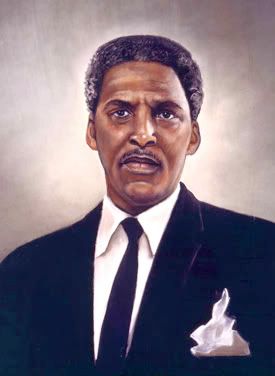 Born on this day in 1912, Rustin was raised by his maternal grandparents; both were active in their community - Rustin's grandmother was a Quaker, his grandfather belonged to the A.M.E. Church - as a boy he was taken by them to meetings of the local chapter of the National Association for the Advancement of Colored People (NAACP). Not only would he have heard W.E.B. Du Bois and James Weldon Johnson speak there, but these legendary civil rights pioneers were also frequent guests in his grandparents' home.
Originally enrolled at Wilberforce University, Rustin's academic career took on a peripatetic quality following his work on behalf of the Scottsboro Nine in 1936; the outrageous bigotry directed at nine black men unfairly imprisoned lit the fuse of the civil rights movement in America - not to mention lighting a fire under one of its most tireless proponents - a fuse which would eventually detonate a generation later in another corner of Alabama during the Montgomery Bus Boycott.
The idea for a march on Washington first occurred during World War II, when the military was still officially segregated; with his typical aplomb President Franklin D. Roosevelt deftly defused that situation before it got out of hand by implementing Executive Order 8802, following which Rustin went to California to advocate on behalf of interned Japanese-Americans. Imprisoned for violating the Selective Service Act, he continued to agitate on behalf on civil rights while incarcerated.
As Rustin's star rose, questions about his sexuality and past affiliation with Communism began troubling the civil rights leadership, notably Rep. Adam Clayton Powell, Jr. (D-NY), who forced Rustin's resignation from the Southern Christian Leadership Conference, which Rustin had founded with Martin Luther King, Jr.; undeterred, Rustin went to work on realizing his other dream. At the March on Washington for Jobs and Freedom in 1963 Dr. King made his famous I Have a Dream speech, but the dream had been Rustin's first, a fact too often overlooked today. In response to the March on Washington, President Lyndon Baines Johnson bullied the Civil Rights Act (1964) and the National Voting Rights Act (1965) through both houses of Congress.
Following King's assassination, Rustin eschewed the angry tactics (and blatant homophobia) of the Black Power movement by turning his attention to gay rights, stating: 'The barometer of where one is on human rights questions is no longer the black community, it's the gay community. Because it is the community which is most easily mistreated.' Bayard Rustin died of complications following surgery in August 1987; he was survived by Walter Naegle, his partner of 10 years.
The memoir of record is Jervis Anderson's Bayard Rustin: Troubles I've Seen; the PBS documentary Brother Outsider: The Life of Bayard Rustin by Nancy Kates and Bennett Singer - a clip of which can be seen here - draws heavily on this work. My thanks to keithboykin.com for this additional information.
*
share on: facebook
Born on this day in 1912, Rustin was raised by his maternal grandparents; both were active in their community - Rustin's grandmother was a Quaker, his grandfather belonged to the A.M.E. Church - as a boy he was taken by them to meetings of the local chapter of the National Association for the Advancement of Colored People (NAACP). Not only would he have heard W.E.B. Du Bois and James Weldon Johnson speak there, but these legendary civil rights pioneers were also frequent guests in his grandparents' home.Originally enrolled at Wilberforce University, Rustin's academic career took on a peripatetic quality following his work on behalf of the Scottsboro Nine in 1936; the outrageous bigotry directed at nine black men unfairly imprisoned lit the fuse of the civil rights movement in America - not to mention lighting a fire under one of its most tireless proponents - a fuse which would eventually detonate a generation later in another corner of Alabama during the Montgomery Bus Boycott.
The idea for a march on Washington first occurred during World War II, when the military was still officially segregated; with his typical aplomb President Franklin D. Roosevelt deftly defused that situation before it got out of hand by implementing Executive Order 8802, following which Rustin went to California to advocate on behalf of interned Japanese-Americans. Imprisoned for violating the Selective Service Act, he continued to agitate on behalf on civil rights while incarcerated.
As Rustin's star rose, questions about his sexuality and past affiliation with Communism began troubling the civil rights leadership, notably Rep. Adam Clayton Powell, Jr. (D-NY), who forced Rustin's resignation from the Southern Christian Leadership Conference, which Rustin had founded with Martin Luther King, Jr.; undeterred, Rustin went to work on realizing his other dream. At the March on Washington for Jobs and Freedom in 1963 Dr. King made his famous I Have a Dream speech, but the dream had been Rustin's first, a fact too often overlooked today. In response to the March on Washington, President Lyndon Baines Johnson bullied the Civil Rights Act (1964) and the National Voting Rights Act (1965) through both houses of Congress.
Following King's assassination, Rustin eschewed the angry tactics (and blatant homophobia) of the Black Power movement by turning his attention to gay rights, stating: 'The barometer of where one is on human rights questions is no longer the black community, it's the gay community. Because it is the community which is most easily mistreated.' Bayard Rustin died of complications following surgery in August 1987; he was survived by Walter Naegle, his partner of 10 years.
The memoir of record is Jervis Anderson's Bayard Rustin: Troubles I've Seen; the PBS documentary Brother Outsider: The Life of Bayard Rustin by Nancy Kates and Bennett Singer - a clip of which can be seen here - draws heavily on this work. My thanks to keithboykin.com for this additional information.
*
share on: facebook
Ed Byrne on Drinking
Dara O'Briain Confronts 'The Troubles'
To my mind the only thing the Irish do better than music is comedy, which accounts for the day's second St Patrick's Day video hat trick...
Here, comedian Dara O'Briain discusses the one incident of anti-Irish sentiment he's encountered in England, at (of all places) the Model Railway Museum in York.
*
share on: facebook
Politics and Religion With Dylan Moran
Dylan Moran is just one of a crop of talented Irish comedians entertaining audiences around the world; a talented stand up, he's also proven himself capable of anchoring a sitcom, as the star of the BBC programme Black Books.
In fact, he's so popular, I've lost track of the number of times I've featured him on the Pop Culture Institute, which is an honour usually reserved for obscure 'Newfoundland royalty of the 1930s'* and the like.
*As Mr Barr is so fond of describing my content...
*
share on: facebook


"The Hands That Built America" by U2
What St. Patrick's Day Irish music video hat trick would be complete without U2? Not this one, I can tell you that right now!
From the 2002 film Gangs of New York - itself loosely based on Herbert Asbury's 1928 book of the same name which was itself only loosely based on actual history - it's the Oscar-nominated The Hands That Built America.
*
share on: facebook
"Bonny Portmore" by Loreena McKennitt
Since it's St. Patrick's Day (more on that later) I feel compelled by a serious case of Anglo guilt to highlight the cultural accomplishments of the Irish on this fine, green day. Despite centuries of Papist oppression and almost constant drunkenness they've managed to crank out quite a quaint little culture for themselves. (What else can I say? Once an English bastard, always an English bastard.) Plus they kind of saved Western Civilization during the Middle Ages, which was pretty cool of them all things considered...
This song, though, has long been one of my favourites; I first heard it in 1992, when Loreena McKennitt's album The Visit (on which it appears) was released. Bonny Portmore describes the rape of Ireland by the British, who decimated the oaken forests of Ireland so as to build ships with which to set about conquering the world. Which, need I remind you, they very nearly did, or at any rate did better than anyone before them until American capitalism beat them at their own game.
What was I talking about?
Oh yeah... Great song... Have a listen...
*
share on: facebook
"The Celts" by Enya
I can hear you purists groaning, but I've long been a fan of Enya, and since I think this is the most Irish of her songs that surely qualifies it for placement here; certainly I've posted things on flimsier pretexts before, which to be quite honest I did so as to later justify stuff like this.
Just be grateful I'm not wearing orange.*
A n y w a y... The song you see above, The Celts, is taken from Enya's 1987 self-titled debut album, which was re-released in 1992 as The Celts, remastered and with a couple of the tracks altered.
*Not even I would be that stupid.
*
share on: facebook
What's The Occasion? St. Patrick's Day
As with many holidays of relatively long-standing, there is considerable lore surrounding St. Patrick's Day; for instance, did you know that the colour associated with St. Patrick is blue? The whole green thing is purely Irish, and what better, as it's said that there are more shades of green in any view of the Irish countryside than the human eye can register. It probably took someone at the Irish Tourist Board ages to come up with that, but it's still a pretty sentiment nonetheless...
 My personal favourite annual tradition is the dyeing of the Chicago River green, which makes a pleasant change from grey speckled with chunks of brown; later in the evening even the alleys and gutters of the city run green, so persistent is the presence of food colouring used in beer that it lends its joyous hue to urine and vomit alike.
Of course, St. Patrick himself wasn't Irish at all, but Roman-born, and brought to Ireland as a slave. This is in marked contrast to many Irish, who left Ireland because they felt like slaves of the British, only to face 'No Irish Need Apply' signs in Canada, the United States, and Australia. The Irish diaspora has become so successful - even in the face of that grievous bigotry - that even Glasgow holds a St. Patrick's Day parade; no word yet on what sort of St. Andrew's Day parade Dublin will be having come November, but it's likely to be a darn sight better than the one they hold on St. George's Day.
These parades are commonplace around the world, but the most famous one is in New York City, where annually millions gather to practice their homophobia under the watchful eye of the Ancient Order of Hibernians. Here at the Pop Culture Institute, of course, we celebrate things a little differently, as you might have guessed if you've been following our coverage; here March 17th is St. Passive-Aggressive's Day, he being our patron saint. We light a candle to Brigid and I exchange the red paint-ball pellets I normally use to take potshots at the drunken frat-boys in the alley behind my apartment for green ones. A good time is had by all (or, in this case, me).
The image used in this post was taken (by me) from a mural on the side of St. Patrick's Secondary School in Vancouver.
*
share on: facebook
My personal favourite annual tradition is the dyeing of the Chicago River green, which makes a pleasant change from grey speckled with chunks of brown; later in the evening even the alleys and gutters of the city run green, so persistent is the presence of food colouring used in beer that it lends its joyous hue to urine and vomit alike.Of course, St. Patrick himself wasn't Irish at all, but Roman-born, and brought to Ireland as a slave. This is in marked contrast to many Irish, who left Ireland because they felt like slaves of the British, only to face 'No Irish Need Apply' signs in Canada, the United States, and Australia. The Irish diaspora has become so successful - even in the face of that grievous bigotry - that even Glasgow holds a St. Patrick's Day parade; no word yet on what sort of St. Andrew's Day parade Dublin will be having come November, but it's likely to be a darn sight better than the one they hold on St. George's Day.
These parades are commonplace around the world, but the most famous one is in New York City, where annually millions gather to practice their homophobia under the watchful eye of the Ancient Order of Hibernians. Here at the Pop Culture Institute, of course, we celebrate things a little differently, as you might have guessed if you've been following our coverage; here March 17th is St. Passive-Aggressive's Day, he being our patron saint. We light a candle to Brigid and I exchange the red paint-ball pellets I normally use to take potshots at the drunken frat-boys in the alley behind my apartment for green ones. A good time is had by all (or, in this case, me).
The image used in this post was taken (by me) from a mural on the side of St. Patrick's Secondary School in Vancouver.
*
share on: facebook
"Danny Boy" by The Muppets
What better way to kick off St. Patrick's Day than with a touching (in so many ways) performance by three of The Muppet Show's finest singers - including Beaker, Animal, and the Swedish Chef as The Leprechaun Brothers - performing that Irish classic Danny Boy; originally the UK Spot of Episode 520, whenever it's played around the Pop Culture Institute there's nary a dry eye (or, indeed, seat) in the place.
*
share on: facebook
POPnews - March 17th
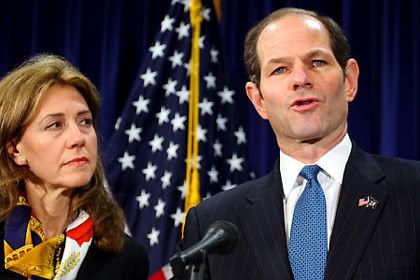
[As Attorney-General of New York, Eliot Spitzer led (amongst others) a campaign against high-end prostitution; his promising career as governor - which some said could have taken him all the way to the White House - cooled when, within weeks of his taking office in 2007, his inner douchebag (which had been so useful in his previous job) began to emerge and terrorize the sensitive burghers of Albany. A year later, on this day in 2008, Spitzer was busted for hypocrisy and hounded from office to live out the rest of his days in tabloid ignominy and on a very short leash indeed - one which his wife, alas, would be holding. Not hot...]
45 BCE - In his last victory, at the Battle of Munda - two days short of one year before his murder - Julius Caesar defeated the forces of Titus Labienus (who was killed that day, alongside 3,000 of his men) and Pompey the Younger (who was later captured and executed for treason).
180 CE - Marcus Aurelius died, leaving Commodus the sole emperor - although he wasn't murdered by Commodus as depicted in the Ridley Scott film Gladiator (2000).
1337 - Edward, the Black Prince, was made the first Duke of Cornwall; this was also England's first duchy - although it is not intended to be passed around the left hand side, but rather automatically to the eldest son of the sovereign by birthright.
1776 - At the outset of the American Revolution, following the 11-month long siege of Boston, British forces under General William Howe evacuated several thousand troops and loyalists after George Washington and Henry Knox fortified Dorchester Heights by placing artillery overlooking the city in order to secure what was then the busiest port in the Thirteen Colonies; the day is still commemorated there as Evacuation Day, which ties in quite nicely with the after-effects of drink copious quantities of green beer.
1805 - The Italian Republic, with Napoleon as president, became the Kingdom of Italy, with Napoleon as King. Coincidence? No... Not at all.
1845 - The rubber band was first patented, in England, by Stephen Perry.
1861 - The Kingdom of Italy (1861-1946) was proclaimed; its first King was Victor Emmanuel II of the House of Savoy. This is not to be confused with the Kingdom of Italy declared on this day in 1805 - see above - which was a vassal state of France, and did not comprise the entire Italian Peninsula (which even this one would not control until 1870).
1941 - The National Gallery of Art was officially opened by President Franklin D. Roosevelt, in Washington, DC.
1950 - Researchers at the University of California, Berkeley announced the creation of element 98, which they named Californium.
1957 - A plane crash in Cebu killed Philippine President Ramon Magsaysay and 24 others.
1950 - Researchers at the University of California, Berkeley announced the creation of element 98, which they named Californium.
1957 - A plane crash in Cebu killed Philippine President Ramon Magsaysay and 24 others.
1958 - The United States launched Vanguard 1 as part of Project Vanguard; the first solar-powered satellite, it is still aloft (although no longer is use), and is thus the oldest piece of space junk orbiting the Earth.
1959 - One week after an unsuccessful uprising in the Tibetan capital of Lhasa Tenzin Gyatso, the 14th Dalai Lama, fled Tibet for India, hotly pursued by the Chinese, who have illegally occupied his country since 1950.
1966 - Off the Mediterranean coast of Spain the Alvin submarine found the fourth 70-kiloton warhead accidentally dropped during the Palomares Incident two months earlier, the other three having fallen on land, thankfully without detonating.
1969 - Golda Meir was sworn in as the first woman Prime Minister of Israel.
1979 - The Penmanshiel Tunnel - first opened in 1846 - collapsed during engineering improvements, killing two workers; the tunnel is no longer in use, its collapse having rather effectively, if drastically, closed it.
1985 - Having already raped and murdered Jennie Vincow, serial killer Richard Ramirez - aka the 'Night Stalker' - committed the second and third of his 14 murders, killing Maria Hernandez and Dayle Okazaki in a spree which terrorized Los Angeles prior to his capture on August 24th.
1992 - A suicide car-bomb killed 29 and injured 242 during an attack on the Israeli Embassy in Buenos Aires.
2000 - The Ugandan cult Movement for the Restoration of the Ten Commandments of God - a breakaway Catholic sect founded by Credonia Mwerinde and Joseph Kibweteere - celebrated what they considered to be the apocalypse by roasting and eating three bulls washed down with 70 crates of soft drinks before killing more than 800 of its members in an explosion.
2008 - New York Governor Eliot Spitzer resigned after a scandal involving a high-end prostitute; he was succeeded by Lieutenant-Governor David Paterson, whose own past was also less than pristine.
*
1985 - Having already raped and murdered Jennie Vincow, serial killer Richard Ramirez - aka the 'Night Stalker' - committed the second and third of his 14 murders, killing Maria Hernandez and Dayle Okazaki in a spree which terrorized Los Angeles prior to his capture on August 24th.
1992 - A suicide car-bomb killed 29 and injured 242 during an attack on the Israeli Embassy in Buenos Aires.
2000 - The Ugandan cult Movement for the Restoration of the Ten Commandments of God - a breakaway Catholic sect founded by Credonia Mwerinde and Joseph Kibweteere - celebrated what they considered to be the apocalypse by roasting and eating three bulls washed down with 70 crates of soft drinks before killing more than 800 of its members in an explosion.
2008 - New York Governor Eliot Spitzer resigned after a scandal involving a high-end prostitute; he was succeeded by Lieutenant-Governor David Paterson, whose own past was also less than pristine.
*
share on: facebook
Wednesday, March 16, 2011
"Ain't No Mountain High Enough" by Tammi Terrell and Marvin Gaye
There are two different clips of this song on YouTube, and now both of them are on the Pop Culture Institute as well...
Probably the most famous of Tammi Terrell's duets with Marvin Gaye, Ain't No Mountain High Enough was written by an equally famous duo - Nickolas Ashford & Valerie Simpson - in 1966, and was recorded by Terrell and Gaye in 1967. It was an even bigger hit for Diana Ross in 1970, as she was separating from The Supremes; personally I prefer the less bombastic arrangement being used here.
*
share on: facebook
Remembering... Tammi Terrell
Tammi Terrell was both prettier than Diana Ross and had a better voice than Diana Ross; so what did Diana Ross have that made her a major star, while Terrell laboured in relative obscurity until her tragically early death?
 The short answer, of course, is 'Berry Gordy's dick inside her', but given that the long answer is 'Berry Gordy's dick way up inside her' doesn't even begin to address either the unfairness that is the music industry or the epic unfairness that was Motown Records, let alone the most unfair thing of all - namely life.
Had Terrell not succumbed to a brain tumour on this day in 1970 - at the age of only 24 - she might be performing still as her chief rival continues to innovate her own brand of crazy. The point is, we will never know; still, it's pondering those unknowables that keeps things interesting around the Pop Culture Institute.
In the meantime, Terrell's music lives on; her duets with another tragic Motown star named Marvin Gaye set the standard for the Motown sound. Following the death of his lovely young singing partner - and at the height of his career - Gaye took a hiatus; when he finally re-emerged from his grief he'd produced his 1971 album What's Going On, which was a major hit, and thought to be inspired by her death.
Tammi's story is told in the memoir My Sister Tommie, written by Terrell's sister Ludie Montgomery (with Vickie Wright).
*
share on: facebook
The short answer, of course, is 'Berry Gordy's dick inside her', but given that the long answer is 'Berry Gordy's dick way up inside her' doesn't even begin to address either the unfairness that is the music industry or the epic unfairness that was Motown Records, let alone the most unfair thing of all - namely life.Had Terrell not succumbed to a brain tumour on this day in 1970 - at the age of only 24 - she might be performing still as her chief rival continues to innovate her own brand of crazy. The point is, we will never know; still, it's pondering those unknowables that keeps things interesting around the Pop Culture Institute.
In the meantime, Terrell's music lives on; her duets with another tragic Motown star named Marvin Gaye set the standard for the Motown sound. Following the death of his lovely young singing partner - and at the height of his career - Gaye took a hiatus; when he finally re-emerged from his grief he'd produced his 1971 album What's Going On, which was a major hit, and thought to be inspired by her death.
Tammi's story is told in the memoir My Sister Tommie, written by Terrell's sister Ludie Montgomery (with Vickie Wright).
*
share on: facebook
Pop History Moment: The Taking of Aldo Moro
On this day in 1978, terrorists with Italy's extreme left Red Brigades carried out a daring daylight kidnapping of former Italian Prime Minister Aldo Moro, killing his retinue of five bodyguards in the process.
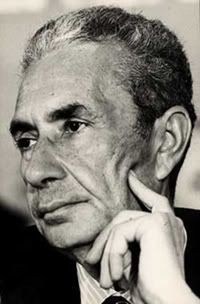 The kidnapping occurred in Rome, in the Via Fani; as Moro was being driven to Parliament his car was overtaken by a white Fiat and a man on a motorcycle. The Fiat then braked hard, causing Moro's driver to crash into it. Before his men could begin firing they were all killed, and Moro was taken hostage. The Red Brigades immediately took responsibility for the crime, stating that their aim was to 'hit at the heart of the state'.
Since all known members of the Red Brigade were then in jail for other crimes, this group was sometimes called the Second Red Brigade; their leader at the time was Mario Moretti.
In the days following Moro's abduction the country descended into a virtual police state, especially in the vicinities of Rome and Naples, where it was thought Moro was being held; at the same time the country erupted in a general strike. In the tense days that followed Pope Paul VI even offered himself as a hostage in exchange for Moro's release.
One concession to compassion offered him by his captors is that Moro was allowed to send letters to his family and colleagues while in captivity; these were not published in their entirety until the 1990s, when it was discovered that more than a few of them were critical of Giulio Andreotti, a Christian Democrat who was then Prime Minister whose alleged ties to the Mafia made him a chief suspect in the Moro Affair.
Moro was seen as one of the country's most patient diplomats, and at the time he was taken he was on his way to vote on what was known as the Compromesso storico (the 'historic compromise') which would have seen the Communists - who had won big in that country's June 1976 general election - sharing power in Italy for the first time; Moro, as the former leader of (and still one of the leading lights in) the Christian Democrats, had brokered this bill. His abduction put an end to it.
For 55 days the country waited on tenterhooks, until May 9th - when the rest of the story will be told...
*
share on: facebook
The kidnapping occurred in Rome, in the Via Fani; as Moro was being driven to Parliament his car was overtaken by a white Fiat and a man on a motorcycle. The Fiat then braked hard, causing Moro's driver to crash into it. Before his men could begin firing they were all killed, and Moro was taken hostage. The Red Brigades immediately took responsibility for the crime, stating that their aim was to 'hit at the heart of the state'.Since all known members of the Red Brigade were then in jail for other crimes, this group was sometimes called the Second Red Brigade; their leader at the time was Mario Moretti.
In the days following Moro's abduction the country descended into a virtual police state, especially in the vicinities of Rome and Naples, where it was thought Moro was being held; at the same time the country erupted in a general strike. In the tense days that followed Pope Paul VI even offered himself as a hostage in exchange for Moro's release.
One concession to compassion offered him by his captors is that Moro was allowed to send letters to his family and colleagues while in captivity; these were not published in their entirety until the 1990s, when it was discovered that more than a few of them were critical of Giulio Andreotti, a Christian Democrat who was then Prime Minister whose alleged ties to the Mafia made him a chief suspect in the Moro Affair.
Moro was seen as one of the country's most patient diplomats, and at the time he was taken he was on his way to vote on what was known as the Compromesso storico (the 'historic compromise') which would have seen the Communists - who had won big in that country's June 1976 general election - sharing power in Italy for the first time; Moro, as the former leader of (and still one of the leading lights in) the Christian Democrats, had brokered this bill. His abduction put an end to it.
For 55 days the country waited on tenterhooks, until May 9th - when the rest of the story will be told...
*
share on: facebook
"All I Wanna Do Is Make Love To You" by Heart
Birthday wishes go out today to Nancy Wilson - whom dupes to the patriarchy like me might refer to as Mrs. Cameron Crowe, even despite their recent divorce - but whom rock fans will best know as the blonde half of the trailblazing rock duo Heart.
Heart's output contains much quality material, from gentle ballads to hard rock, but far and away the worst of them is this little ditty which, while it was their biggest hit, was also their last; it turns out, rock fans did not respect them in the morning. Released in March 1990 from their album Brigade, All I Wanna Do Is Make Love To You was written by Robert 'Mutt' Lange - whom dupes to the matriarchy like me (turns out I'm easily duped - who knew?) will know as Mr. Shania Twain, even despite their somewhat less recent divorce - and it features such an egregious display of male fantasy female behaviour that I just couldn't resist holding it up for ridicule here.
Keeping in mind the song was released in 1990, the woman in the video a) picks up a hitch-hiker on a dark, deserted road, b) takes him to a motel, and c) fucks his brains out. Nowhere in the video is there a condom (let alone pepper spray). We're expected to believe that because the guy's hot he's okay ('cause Ted Bundy was such an uggo); the lyrics are similarly icky, but I won't repeat them here because a) you can listen to them for yourself, and b) I'm trying to keep my dinner down*.
In the end, though, it's alright because she simply needed a sperm donor; the man she loves can't give her a baby, and she really wants one, so she's forced to conduct this brazen spunk mugging to get one**. This sort of thing happens all the time, apparently. Yeah, maybe in porno.
*From yesterday!
**Because then as now there are no sperm banks...
*
share on: facebook
POPnews - March 16th

[From its commanding position on the western bank of the Hudson River adjacent to Highland Falls 80 km (50 miles) north of New York City, West Point has been witness to the sweep of American history from the treason of Benedict Arnold in July 1780 (during which he attempted to turn the fort over to the British, an event known to history as the Betrayal at West Point) to the first graduate Joseph Gardner Swift in 1794 right through to the current day, although it's a little-known fact that most of its pupils have been trained as engineers. The entire site was made a national landmark in 1960.]
1190 - At least 150 Jews were massacred at York (on the day of the Jewish feast of Shabbat ha-Gadol, which is the shabbat before Passover) when an angry mob led by Richard de Malbis which had been laying siege to a building on the site of Clifford's Tower - a prominent part of York Castle where they'd earlier sought and been granted refuge - breached their ersatz Masada*; it was more likely his massive debt with agents of the banker Aaron of Lincoln**, though, that inspired de Malbis to encourage the frenzy in the first place, rather than any religious conviction***. Many of those trapped inside, including Yom Tov of Joigny, committed suicide rather than submit to the worst ravages of the mob; it turns out they didn't honour the promise they made to not harm the survivors after all...
*Eventually setting it ablaze with all the compassion and integrity we've come to associate with his co-religionists ever since the First Council of Nicaea in 325 CE made them as uppity as all get out!
**Who had - under the aegis of his bank - made possible the building of the Abbey of St. Albans, Lincoln Minster, Peterborough Cathedral, and no fewer than nine Cistercian abbeys, and who was, at the time of his death in 1186, the second wealthiest man in England, after only the King, Henry II, who was nevertheless heavily in his debt.
***Religious self-righteousness being the most convenient cover for a multitude of sins, including greed.
1322 - At the Battle of Boroughbridge during the First War of Scottish Independence Edward II's troops led by Sir Andrew Harclay defeated forces loyal to the King's cousin, Thomas, Earl of Lancaster; also killed in the fracas was Humphrey de Bohun, 4th Earl of Hereford. The rest of the rebellious nobles were captured, charged with treason, and executed - three of them (the Lords Clifford, Mowbray, and Deynville) by being hung in chains from York Castle.
1521 - Ferdinand Magellan reached the Philippines during his circumnavigation of the world.
1621 - Samoset, of the Mohegan nation, visited the settlers of Plymouth Colony, greeting them in their own language with the words 'Welcome, Englishmen! My name is Samoset' - which gave them quite a shock let me tell you.
1660 - England's aptly-named Long Parliament - originally called in November 1640 - finally disbanded itself after having executed Charles I, survived Oliver Cromwell, and made way for the triumphant return of Charles II.
1689 - The 23rd Regiment of Foot or Royal Welch Fusiliers was founded to oppose the impending Catholicization of England under James II, finally earning the honorific 'royal' during the War of the Spanish Succession in 1713. Having seen much action during the American Revolution, the Boer War, and World War I, in February 2006 they were amalgamated with the Royal Regiment of Wales to form a new large regiment called the Royal Welsh.
1792 - King Gustav III of Sweden was fatally shot by Jacob Johan Anckarström (aided by Claes Horn and Adolf Ribbing) during a masked ball at the Royal Opera House in Stockholm, finally succumbing to his injuries on March 29th.
1802 - The United States Military Academy at West Point was established.
1815 - Prince Willem of the House of Orange-Nassau proclaimed himself King Willem I of the United Kingdom of the Netherlands, making him Holland's first constitutional monarch.
1861 - Edward Clark became Governor of Texas, replacing Sam Houston, who was evicted from office for refusing to take an oath of loyalty to the Confederacy.
1939 - Egypt's Princess Fawzia married Iran's Shah Mohammad Reza Pahlavi; they were divorced 'for her safety' in November 1948 following the birth of their only offspring, Princess Shahnaz Pahlavi. In March 1949 Her Majesty married Ismail Hussain Shirin Bey and thus forfeited her Iranian titles; her ex-husband, meanwhile, would marry Soraya Esfandiary-Bakhtiari and Farah Diba in turn.
1952 - In Cilaos - a town on the tiny French holding of Réunion in the Indian Ocean - 1,870mm (73 inches) of rain fell in one day, setting a new world record.
1953 - Yugoslavia's Marshal Josip Broz Tito arrived for a five-day State Visit to the United Kingdom, during which time he was entertained by Her Majesty The Queen.
1968 - Between 350 and 500 Vietnamese villagers - men, women, and children - were killed by American troops during the My Lai massacre.
1976 - Britain's Labour Prime Minister, Harold Wilson, resigned, taking the Nation quite by surprise; unbeknownst to most people, Wilson was then in the first stages of Alzheimer's disease.
1978 - The supertanker Amoco Cadiz split in two after running aground on Portsall Rocks, three miles off the coast of Brittany, resulting in what is now the 5th-largest oil spill in history - but which was then the largest. In all 1.6 million barrels (219,797 tons) were lost, of which less than 20% was recovered...
1985 - American Associated Press journalist Terry Anderson was taken hostage in Beirut; after six years and nine months in captivity he would be released in December 1991.
1988 - On the orders of Saddam Hussein the Kurdish town of Halabjah in Iraq was bombed with a mix of poison gas and nerve agents during the Halabja poison gas attack, killing thousands of people in the process. On the plus side, the attacks used up the weapons of mass destruction Hussein had bought from the very same Western powers who years later invaded Iraq in search of those very same weapons!
1995 - Mississippi formally ratified the Thirteenth Amendment, becoming the last state to approve the abolition of slavery, 130 years after such a measure had been approved by Congress.
*
share on: facebook
Subscribe to:
Posts (Atom)